This Week in The Damage Report
This week in Sellersburg, Indiana, contractors installing fiber-optic infrastructure struck an underground utility line during construction. While no injuries were reported, the strike caused service disruptions for nearby homes and businesses, once again demonstrating how incomplete underground visibility can quickly turn routine work into community-wide impact.
Utility damage doesn’t stay contained to the job site. It ripples outward.
DAMAGE OF THE WEEK
What Happened?
During fiber-optic installation, crews struck a buried utility line that was either missing from records or inaccurately documented. The strike interrupted service and required emergency response from utility crews, delaying both the project and other scheduled work.

Caution tape around junction box hole filled with rocks, by WDRB News, 2026. From “Fiber installation in Sellersburg raises safety concerns after another utility line strike” by Richard Essex, January 12, 2026, WDRB ([URL]).
Why It Happened
Incidents like this rarely have a single cause. Common contributing factors include:
Incomplete or outdated underground utility records
Limited visibility into undocumented or legacy infrastructure
Gaps in coordination between contractors, utilities, and local authorities
These are systemic issues—and they show up repeatedly in damage reports nationwide.
The Real Impact
The consequences extended well beyond the excavation site:
Emergency utility crews were pulled from planned work
Businesses lost internet connectivity, affecting operations
Residents experienced service disruptions impacting work and school
Project timelines were delayed, increasing costs and complexity
One missed line can disrupt an entire community.
SOCIAL MEDIA See It for Yourself
Visuals of the Week
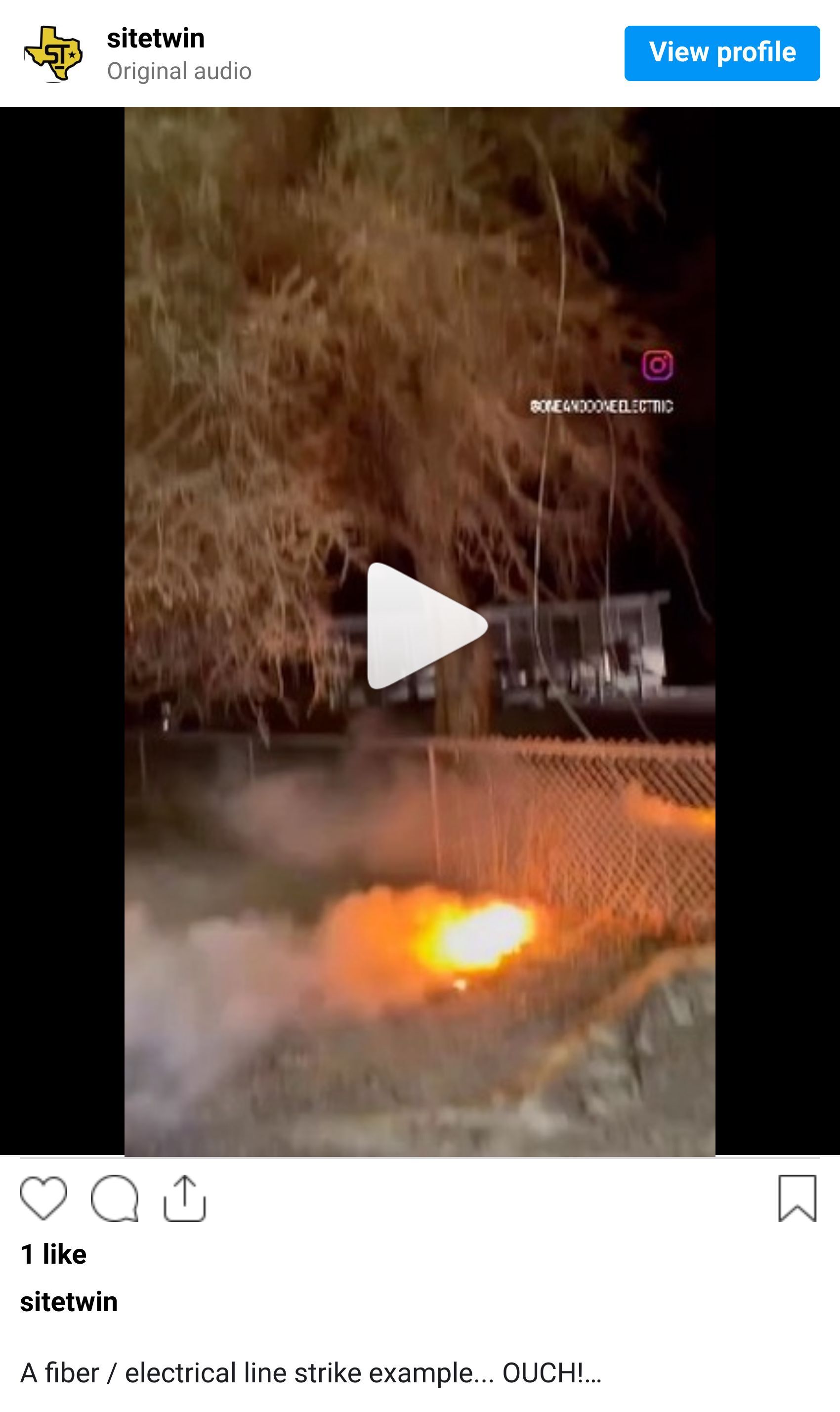
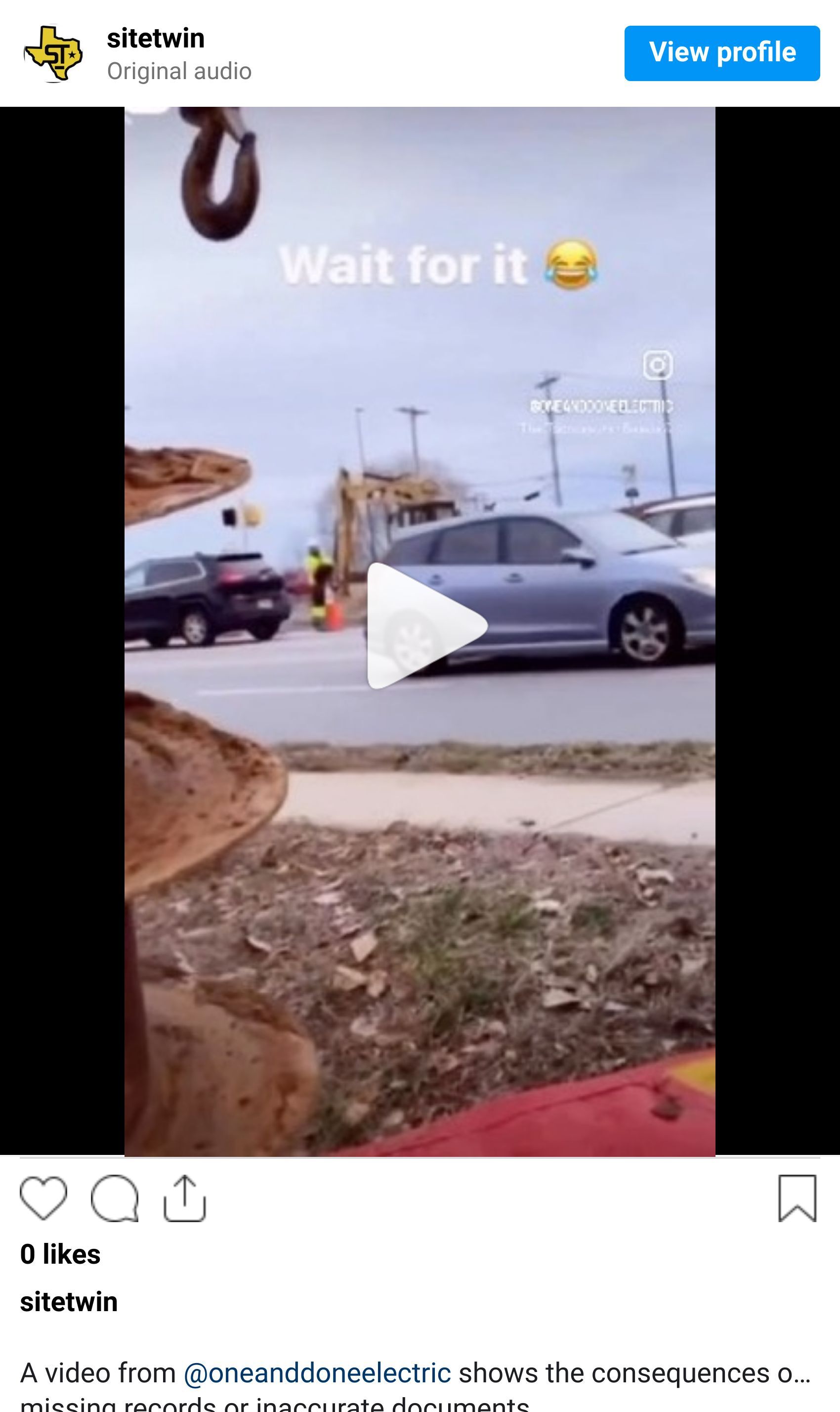
The videos below are illustrative examples of utility strikes similar to those discussed in this report. While not footage from the specific incidents above, they demonstrate the scale and impact underground damage can cause when lines are missed.
Fiber / electrical line strike example:
Utility damage during excavation:
DAMAGE CONTROL TIP
Verify before you dig. Every time.

SiteTwin on job site. Photo by SiteTwin Media, 2026.
Before excavation begins, cross-check multiple data sources—maps, field records, and digital utility models. Validation across systems reduces uncertainty, lowers risk, and keeps projects on schedule.
UTILITY STRIKE SNAPSHOT
A similar incident occurred in Columbus, Ohio, where a water main was struck during roadwork, forcing emergency repairs and road closures.
Lesson: These events are not isolated. They’re symptoms of fragmented data and limited visibility.
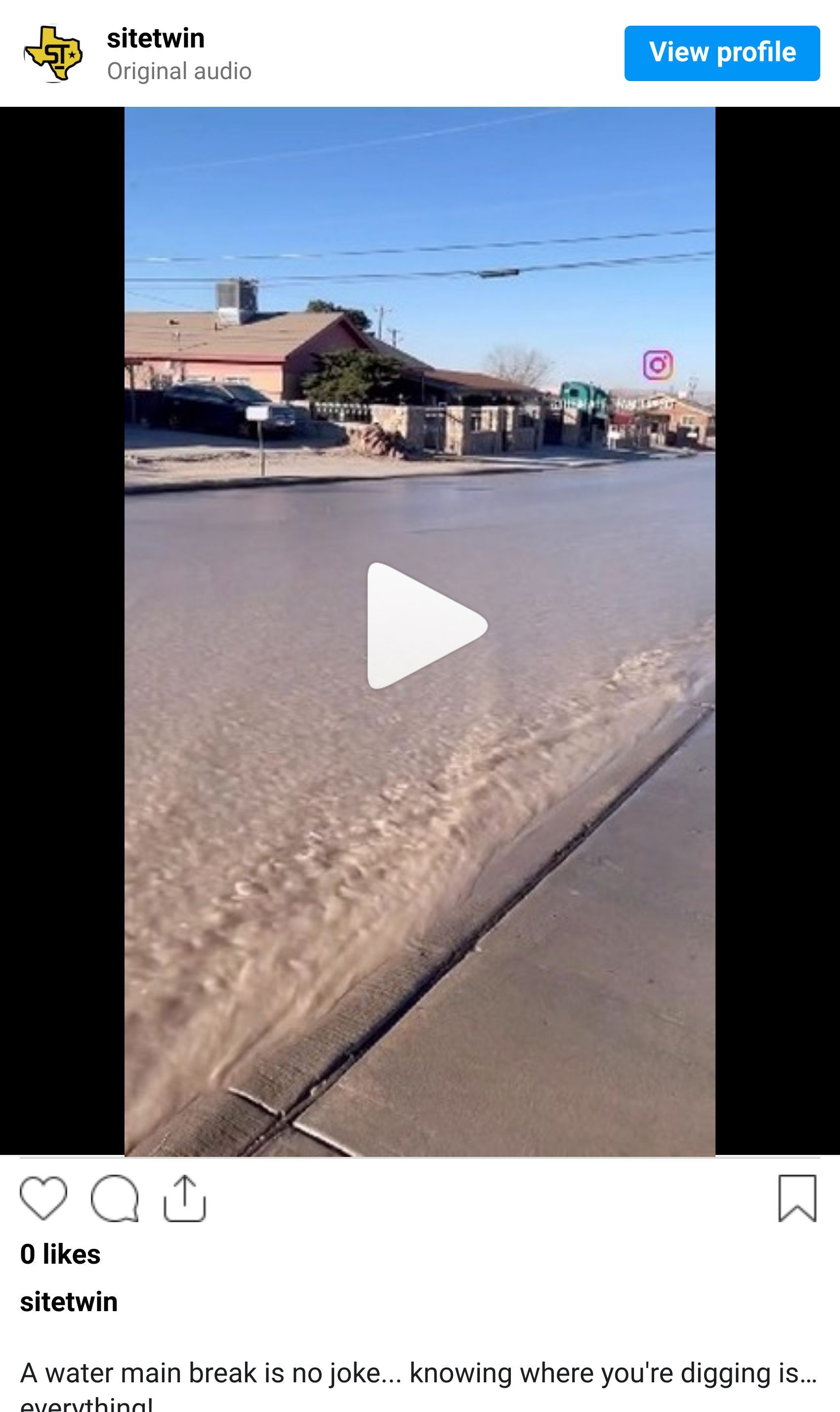
The videos below are illustrative examples of utility strikes similar to those discussed in this report. While not footage from the specific incidents above, they demonstrate the scale and impact underground damage can cause when lines are missed.
Water main break impact:
Why This Matters
Utility strikes affect far more than construction schedules:
Homes and businesses lose essential services
Emergency repairs delay other infrastructure projects
Costs increase for municipalities, contractors, and taxpayers
Safety and environmental risks rise
Understanding what lies underground isn’t just technical—it’s foundational to protecting communities.
Closing Insight:
Prevention is always more effective than response.
Accurate underground data, validated records, and clear visibility reduce risk before work begins. Every project—no matter the size—benefits from better information and smarter planning.
SiteTwin helps teams understand what’s below the surface before they break ground.
Learn more, see recent projects, or request support:
https://linktr.ee/sitetwin
Until next time,
The Damage Report by SiteTwin