
This Week in The Damage Report

A fiber optic company had to pause work in a Lexington County neighborhood after repeatedly striking water lines and leaving residents without water service.
This week we are reporting an incident in Lexington County, South Carolina, where construction of new fiber-optic infrastructure was halted after crews repeatedly struck buried water lines, causing service outages and frustration among residents. County officials confirmed that improperly marked or unmarked utility lines were a primary factor in the strikes, prompting inspectors to intervene and pause the work.
Utility damage doesn’t just slow progress, it disrupts daily life and undermines community trust.
DAMAGE OF THE WEEK
What Happened?
In a neighborhood in Lexington County, subcontractors installing fiber-optic cable for a broadband provider hit multiple underground water mains during construction. Residents experienced frequent water service interruptions and flooding in front yards as a result of the damage. The county demanded a corrective action plan from the fiber company and halted construction until better coordination with the local water utility could be assured.
Why It Happened
According to statements from the fiber provider, most of the utility strikes were caused by improperly marked or unmarked water lines, indicating gaps in underground utility data and marking practices before excavation. Without accurate location information, crews were left vulnerable to striking buried infrastructure.
The Real Impact
The consequences of these repeated hits extended throughout the community:
Water outages disrupted residents’ daily needs
Safety concerns rose with unexpected line breaks
Construction was paused, delaying broadband rollout
Trust eroded between residents, utilities, and contractors
When lines aren’t correctly mapped, every dig becomes a gamble
Primary Source: Fiber optic company pauses work after repeated water line strikes in Lexington County neighborhood — WIS https://www.wistv.com/2025/10/24/fiber-optic-company-pauses-work-after-repeated-water-line-strikes-lexington-county-neighborhood/
AN EVOLVING STANDARD: BRIDGING TO ASCE-75-22
ASCE-75-22 is increasingly being referenced as agencies and owners look for consistency in how underground utility information is documented and relied upon.
The challenge isn’t understanding the standard.
It’s meeting it without slowing construction or exploding costs.
Interior conduit and pipe mapping provides a practical bridge.
By directly measuring conduit alignment, depth, and transitions, modern interior mapping tools produce documentation that aligns with today’s accuracy and traceability expectations — without defaulting to widespread intrusive investigation or re-excavation.
When deployed intentionally, this data supports:
Permitting and inspection review
Verified as-builts for acceptance
Long-term asset records agencies can trust
Surface-only methods often can’t deliver that level of confidence.
EXISTING PIPE AUDITS: TURNING UNKNOWN ASSETS INTO USABLE INFRASTRUCTURE
Across the country, there are extensive networks of empty conduit and pipe that could be reused, leased, or sold — but uncertainty around location and condition often blocks approval.
Interior pipe audits change that.
By mapping existing pipe from the inside, teams gain measurable documentation of where a pipe actually runs and whether its geometry supports reuse. That data supports:
Permitting decisions
Asset transfers
Future design — without reopening the ground
At SiteTwin, our role is ensuring this data is deployable in the real world — including access planning, surface verification, coordination with active construction, and delivering documentation agencies will actually approve.
SOCIAL MEDIA
See It For Yourself
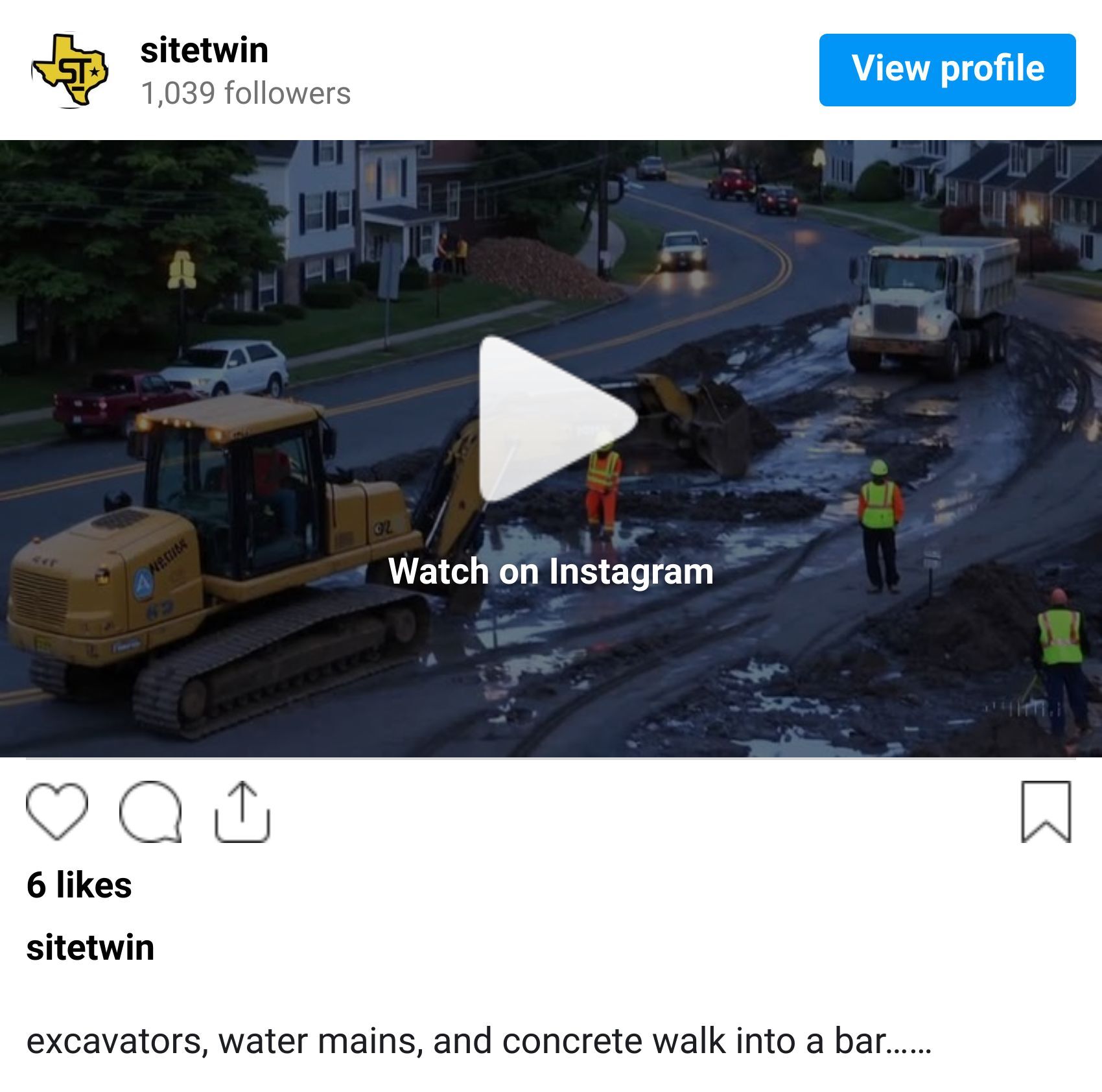
Water main break during excavation
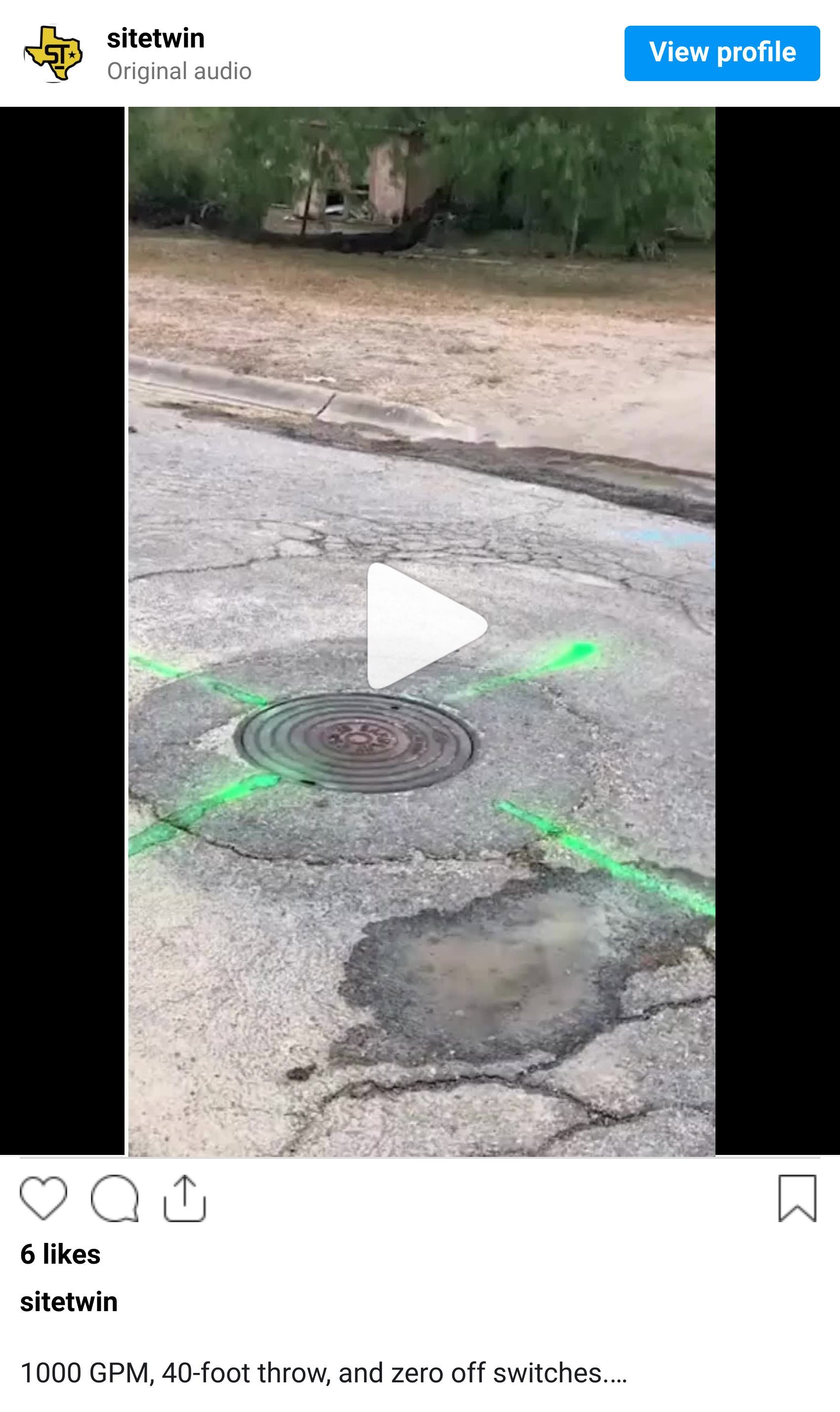
Flooding from line damage
TOOLS
DAMAGE CONTROL TIP
Confirm markings before every dig.
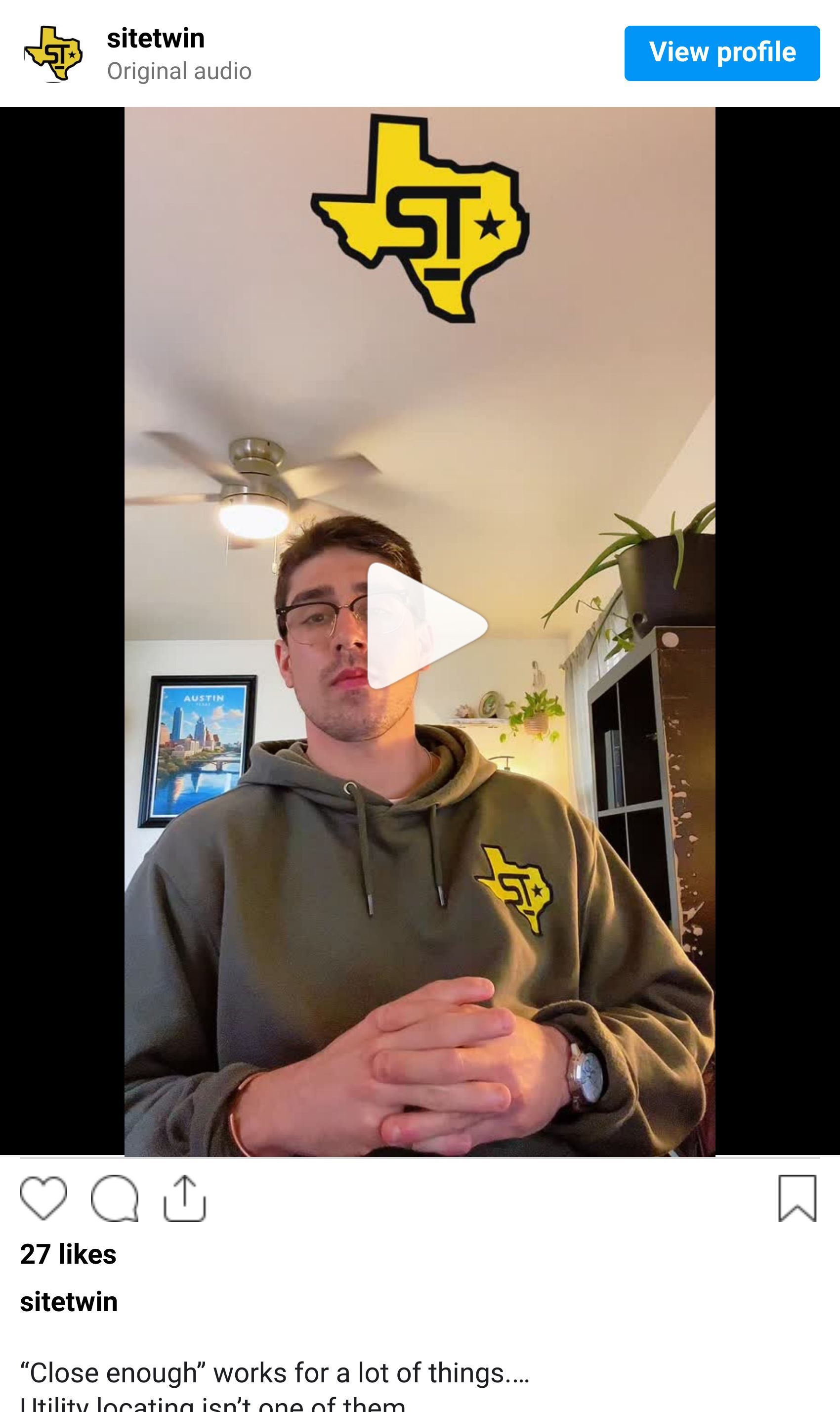
Nick Clawson of SiteTwin. Video by SiteTwin Media, 2026.
Regardless of project size, always verify utility marks through:
Multi-source validation (811 + field scans)
Advanced locating tech (GPR, GIS overlays)
Cross-discipline pre-planning
Better visibility reduces guesswork — and prevents damage.
UTILITY STRIKE SNAPSHOT
Utility strike surveys show that nearly two-thirds of line strikes happen because the marked locations differed significantly from actual line positions, even after 811 calls are made. This highlights systemic issues with marking accuracy that contribute to damage nationwide.
Why This Matters
Underground line damage doesn’t just cost time and money:
Essential services are interrupted
Trust in infrastructure expansion erodes
Project teams face delays and complexity
Public safety risks increase
Accurate data and reliable marking aren’t optional — they are foundational to safe construction.
Closing Insight
Information wins before the first shovel breaks ground.
Smart subsurface mapping, validated utility records, and coordinated planning help teams avoid unnecessary damage and maintain momentum.
SiteTwin helps teams understand what’s below the surface before they break ground.
Learn more, see recent projects, or request support:
https://linktr.ee/sitetwin